
Building in Bali: Construction Practices, Costs, and Market Trends in 2026
By draftGecko
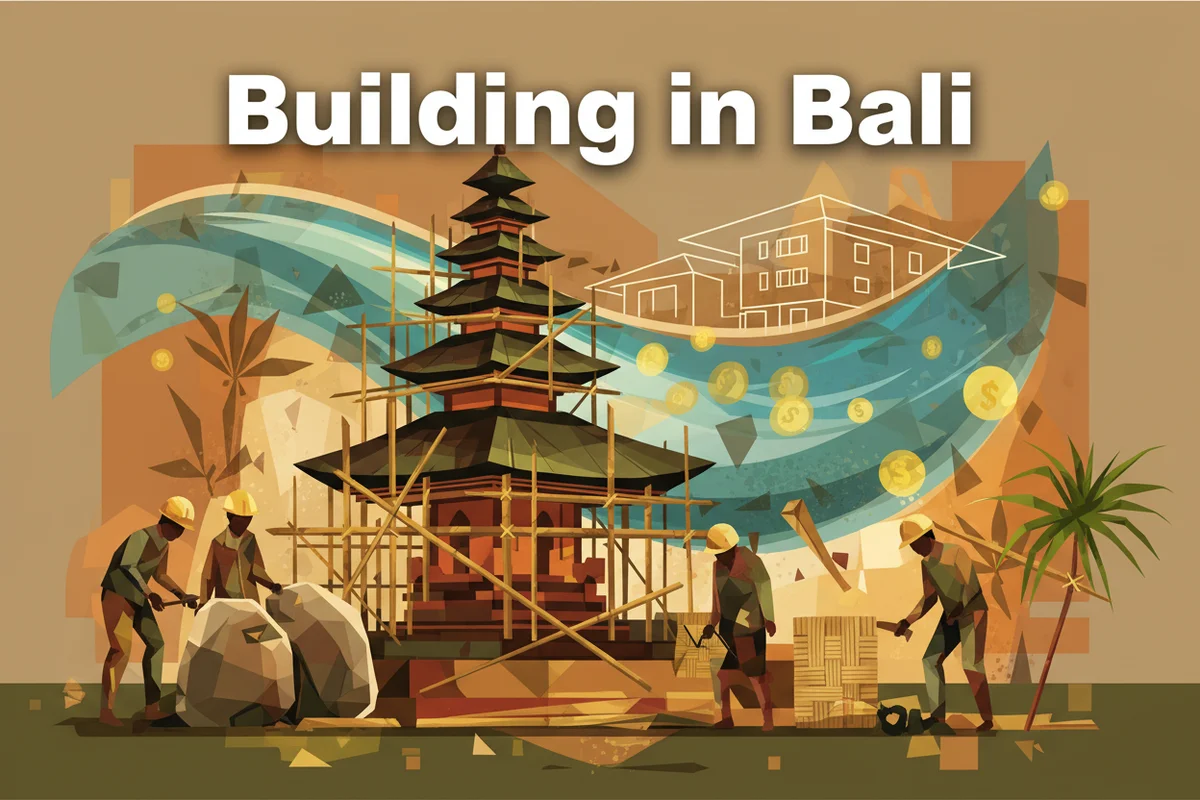
Explore Bali's unique construction practices, costs, and market trends in 2026, blending tradition with modern demands in a booming tourism industry.
Building in Bali: Construction Practices, Costs, and Market Trends in 2026
Bali occupies a unique position in the global construction landscape, where centuries-old building traditions meet the demands of one of the world's most visited tourist destinations. For builders, developers, and homeowners considering a project on the island, understanding the local construction environment is essential before breaking ground. The interplay between traditional Balinese craftsmanship, modern design expectations, foreign investment, and environmental pressure creates a construction market that is unlike anywhere else in Southeast Asia.
Traditional Balinese Construction Practices
At the foundation of Balinese architecture is a deep connection between the built environment and the natural and spiritual world. Traditional construction draws heavily on locally sourced materials including bamboo, thatch, and reclaimed timber, all of which are chosen not only for their availability but for their cultural resonance. Bamboo in particular has long been valued for its structural flexibility and rapid renewability, making it a practical and philosophically appropriate choice in a culture that prizes harmony with nature.
The spatial organization of traditional Balinese homes is governed by a system of principles known as Asta Kosala Kosali, a set of guidelines rooted in Hindu cosmology that dictates how a dwelling should be oriented and arranged to achieve balance between the occupants and their environment. These principles influence everything from the placement of the family temple within a compound to the relationship between sleeping quarters and communal spaces. A traditional Balinese compound is not simply a house but a carefully ordered collection of pavilions, each with a defined purpose and position relative to the cardinal directions and the sacred mountain Agung.
Intricate stone and wood carving is another defining feature of traditional Balinese construction. Decorative panels, gate surrounds, and column details are hand-carved by skilled artisans, and this craftsmanship carries both aesthetic and spiritual meaning. These techniques are time-intensive and require years of training, which makes them increasingly difficult to sustain as the pace of construction on the island accelerates.
Modern Construction Trends and the Influence of Tourism
The rapid growth of Bali's tourism industry has fundamentally reshaped what gets built on the island and how it is designed. Demand for luxury villas, boutique resorts, and high-end commercial establishments has driven a construction boom that shows little sign of slowing. International investors and developers have brought with them expectations for contemporary design, reinforced concrete structures, imported fixtures, and resort-standard amenities that sit in tension with traditional building methods.
The most commercially successful projects in Bali today tend to blend these two worlds, incorporating traditional Balinese elements such as carved stonework, alang-alang thatch roofing, and open-air pavilion layouts within a structural framework built to modern engineering standards. This hybrid approach appeals to international visitors who want an authentic cultural experience without sacrificing comfort or reliability. Projects like the Rumah Harumi house in Bali, designed by Earth Line Architects, demonstrate how contemporary residential architecture can draw on local materials and spatial philosophy while meeting modern performance standards.
Foreign investment has been a significant driver of this trend, with buyers from Australia, Europe, and across Asia acquiring land and commissioning villa developments for both personal use and short-term rental income. This has pushed construction activity into areas of the island that were previously undeveloped, including rice paddy land and hillside zones that present both logistical and environmental challenges.
Construction Costs by Region
Understanding construction costs in Bali requires looking at the island in geographic zones, as prices vary considerably depending on location, access to materials, and the prevailing design expectations of each area.
In the southern coastal zones, which include areas such as Seminyak, Canggu, and Uluwatu, construction costs as of 2026 range from approximately $1,400 to $1,800 per square meter. These figures generally cover the building structure, interior finishes, and installed fixtures. In the central Ubud region, which is more inland and associated with cultural tourism and wellness retreats, costs typically range from $1,200 to $1,600 per square meter. The lower end of these ranges tends to apply to simpler designs using locally available materials, while the upper end reflects more complex architectural programs, imported materials, and high-specification finishes.
It is important to note that these per-square-meter figures exclude a number of significant cost items that are common to most villa and resort projects. Swimming pools, landscaping, furniture and soft furnishings, building permits, and connection to utilities are all additional expenses that can add substantially to a project's total budget. Imported materials and custom-designed features can also push costs well beyond the base range, particularly for buyers seeking to replicate the aesthetic of high-end international hospitality projects.
The typical construction timeline for a villa in Bali runs between 12 and 18 months depending on the size and complexity of the design, which means financing and cash flow planning need to account for an extended build period before any rental income can be generated.
Challenges Facing Local Trades
Local tradespeople and contractors in Bali operate in a demanding environment shaped by several converging pressures. Material costs have been subject to fluctuation, driven by global supply chain disruptions and the rising cost of imported goods. Cement, steel reinforcement, and quality timber are all subject to price variability that makes accurate project budgeting difficult, particularly for fixed-price contracts.
Competition from foreign contractors and internationally connected project management firms has also intensified, particularly at the upper end of the market. Local builders who have traditionally operated through informal networks and word-of-mouth referrals are increasingly required to demonstrate compliance with formal building codes, environmental regulations, and safety standards in order to win work on larger developments. Bali's building regulations have evolved in response to both safety concerns and pressure from central government in Jakarta to bring regional construction standards into alignment with national requirements.
Balancing the use of traditional techniques with the structural demands of modern construction presents another layer of complexity. A carved stone entrance gate or a hand-finished lime plaster wall requires skilled artisans whose knowledge has been passed down through generations, but integrating this work into a project managed on a commercial timeline and budget requires careful coordination between different trades and disciplines.
Environmental and Cultural Sustainability
The pace of construction growth in Bali has raised serious concerns about the island's long-term environmental and cultural sustainability. Deforestation associated with land clearing for new developments, pressure on water resources, and inadequate waste management infrastructure are all documented challenges that the construction industry contributes to. Rice paddies, which are protected under local zoning regulations in many areas, have nonetheless been lost to development in some parts of the island as demand for buildable land has intensified.
Cultural preservationists have raised concerns that the rapid adoption of modern construction aesthetics risks eroding the architectural identity that makes Bali distinctive in the first place. If the traditional skills required to produce carved stonework, thatched roofing, and timber joinery are not actively maintained and transmitted to younger generations of craftspeople, they may eventually disappear from the construction workforce entirely.
Sustainable building practices, including the use of locally sourced natural materials, passive cooling design strategies suited to the tropical climate, and responsible site management, are increasingly being promoted by environmentally conscious developers and architects working on the island. These approaches align well with both traditional Balinese building philosophy and the expectations of an international market that is growing more attentive to environmental credentials.
Outlook for Bali's Construction Market
Bali's construction market is expected to remain active through the late 2020s, supported by continued tourism growth, ongoing foreign investment in residential and hospitality developments, and infrastructure investment by the Indonesian government. For stakeholders entering this market, success depends on a thorough understanding of local zoning and permitting requirements, realistic cost planning that accounts for all project components, and a genuine engagement with the traditional building culture that gives Balinese architecture its enduring appeal. Working with experienced local contractors who understand both the regulatory environment and the craft traditions of the island remains one of the most reliable ways to deliver a project that is well-built, culturally appropriate, and commercially viable.